
An heir to the Impressionists, sensitive to the ever-changing atmospheres of all kinds of landscapes, he is the painter of blossoming trees. While his pictorial style, driven by curiosity, experimented with several prominent styles of the late 19th century, he situates the majority of his work within the Post-Impressionist movement.
Youth: the discovery of Impressionism
Born into a wealthy family, Thibésart had the luxury of dedicating his life to painting, without having to worry about earning a living. His talent was nonetheless genuine. From childhood, he drew with virtuosity, and when his family moved to Enghien, he met Émile Boggio, a Venezuelan Impressionist painter who became his teacher and friend.
After his education at the Lycée Rollin in Paris, he enrolled at the École des Beaux-Arts in the same city in 1894, occasionally attending the Académie Julian. A contemporary of Symbolism, he was exposed to it, and the movement’s influence can be heard in some of his early works.
Yet, little by little, Thibésart developed a less fragmented approach to the Impressionist brushstroke and embarked on a quest for tonal unity. Where his predecessors had paved the way for a decomposition of light, he favored a sensitive, often enveloping recomposition that tended toward a form of atmospheric synthesis. This orientation brought him closer to certain late naturalists than to the avant-garde movements of his time, to which he deliberately remained aloof.
Raymond Thibésart, a Rich Education
In the very early years of the 20th century, Thibésart had a house built on the banks of the Seine, a short distance from that of his friend Boggio in Vaux-sur-Seine. Together, they explored the landscapes surrounding Paris and undertook numerous study trips. Italy, Belgium, Corsica—landscapes and seasons unfold, captured by Thibésart in vibrant pastels.
Once back in his studio on the banks of the Seine, these drawings inspire large-format oil paintings that lose none of the spontaneity and luminosity of the pastels.
His work is characterized by a predilection for river landscapes, undergrowth, and garden scenes. The Seine, the Oise, and ponds are recurring motifs. The viewer follows his patient and gentle exploration of light, its movements, reflections, and transparencies. Thibésart excels in rendering foliage and shimmering water, achieved through subtle layering of glazes and a nuanced palette, often dominated by deep or vibrant greens, muted or brilliant blues, delicate ochres, and velvety lilacs.

Posterity
Long relegated to the margins of the major modernist narratives, he remained for a long time in the shadow of the 19th-century Impressionists and his early 20th-century contemporaries. This discretion is now working in his favor. Discerning collectors are gradually rediscovering him with delight. His coherent body of work is still accessible. His distinctive and serene style attracts attention with its tranquility, his almost palpable disdain for recognition, and his life entirely devoted to painting combine to create a strong, talented, and unique character.
The mature works, particularly those executed between 1910 and 1930, account for the majority of demand: they demonstrate a perfect balance between structure and sensitivity, with a fully realized technical mastery.
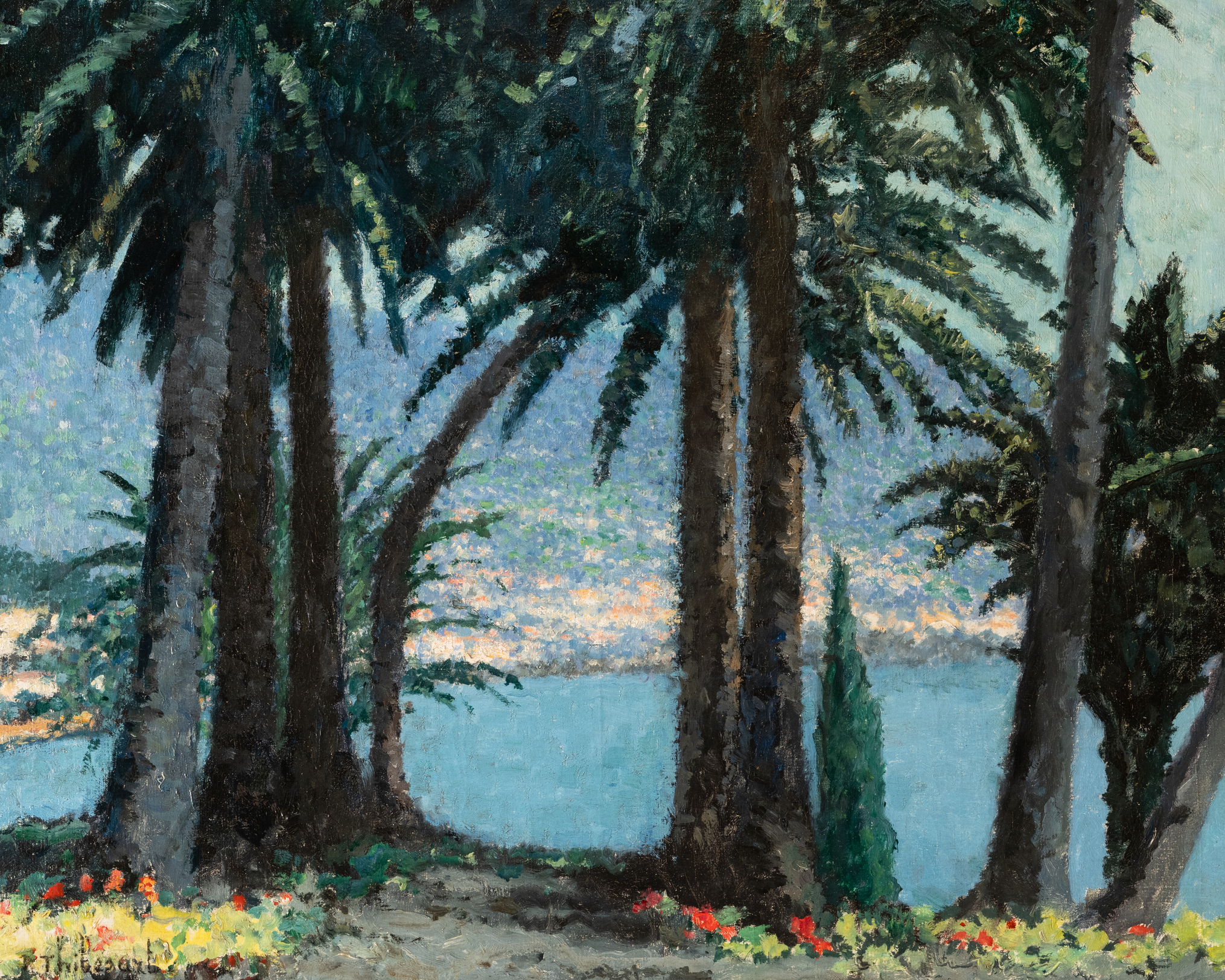
Auction sales show encouraging regularity, with a progressive appreciation of the most accomplished pieces, especially the large-format works and the most luminous compositions. Finally, the growing interest in “transitional” artists, neither fully Impressionist nor fully Modern, helps to give Thibésart a unique place in a more nuanced art history. His contemplative work is restful and reassuring, embracing modernity without abstracting it. His large-format, luminous, captivating, and perfectly executed paintings offer the opportunity to acquire a minor master who could soon have the makings of a great one.
Autres ressources et documentations

Clodion, the Brilliant Sculptor
Born in Nancy in 1738, Claude Michel, known as Clodion, established himself as one of the most captivating sculptors of the late Ancien Régime. His nickname, Clodion (little…

Model Ships
Whether river or sea vessels, imposing dimensions or miniaturization, models contain a whole world of travel!
Workshop furnitures
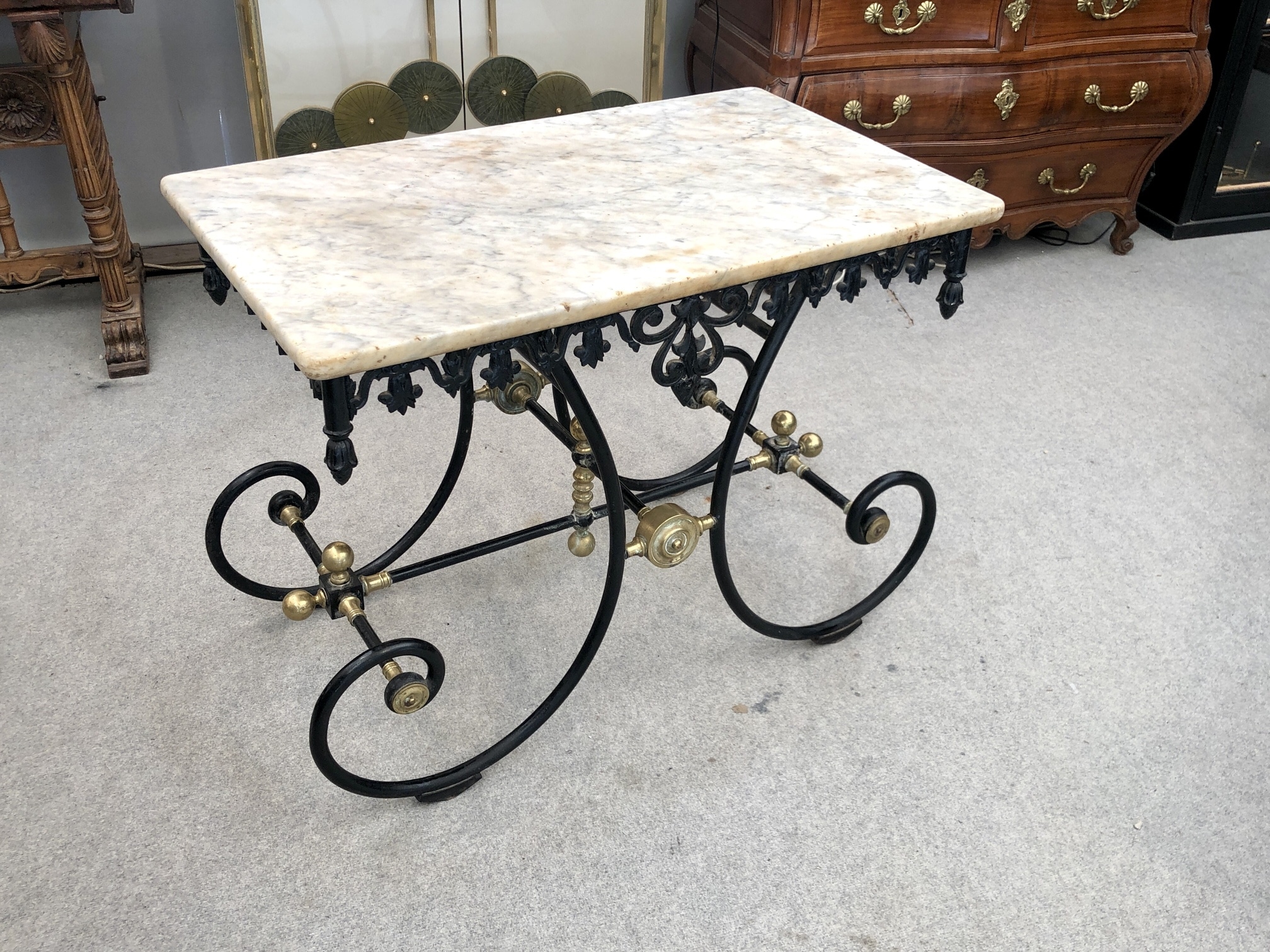
Whether made of wood or metal, from the woodworker to the butcher, including the haberdasher or the draper, trade furniture is a distinct area of antiquity.

Buying an Antique Chest of Drawers
Buying an Antique Chest of Drawers with Confidence: Styles, Marks of Authenticity, and Pitfalls to Avoid

Plaster Sculptures, Plaster Casts
For a long time, plaster casts suffered from a poor reputation. Often regarded as crude replicas, and sometimes even dismissed as inexpensive imitations, they nonetheless had…

The Middle-Ages Furniture
Rare and highly sought-after, Middle-Ages furniture is making a strong comeback. An overview of this market, where enlisting the guidance of a professional is strongly advisable.