
Heir to a family tradition, as he was the nephew of Lambert-Sigisbert Adam (1700-1759), a student of the sculptor Jean-Baptiste Pigalle (1714-1785), he received a proper education at the Royal Academy of Painting and Sculpture, from which he won the prestigious Prix de Rome in 1759.
Classical Influence
Naturally, his trip to Rome had a lasting impact on his artistic style. He notably created small terracotta figures that greatly appealed to collectors, but he didn’t stop there. The Duke of La Rochefoucauld commissioned a marble group from him in 1766, and in 1768 he created a Vestal Virgin for Catherine the Great. Inspired and faithfully drawing on classical references and a decorative sensibility inherited from the late Baroque, he extended his stay until March 1771, beyond the three years allotted by the Prix de Rome.
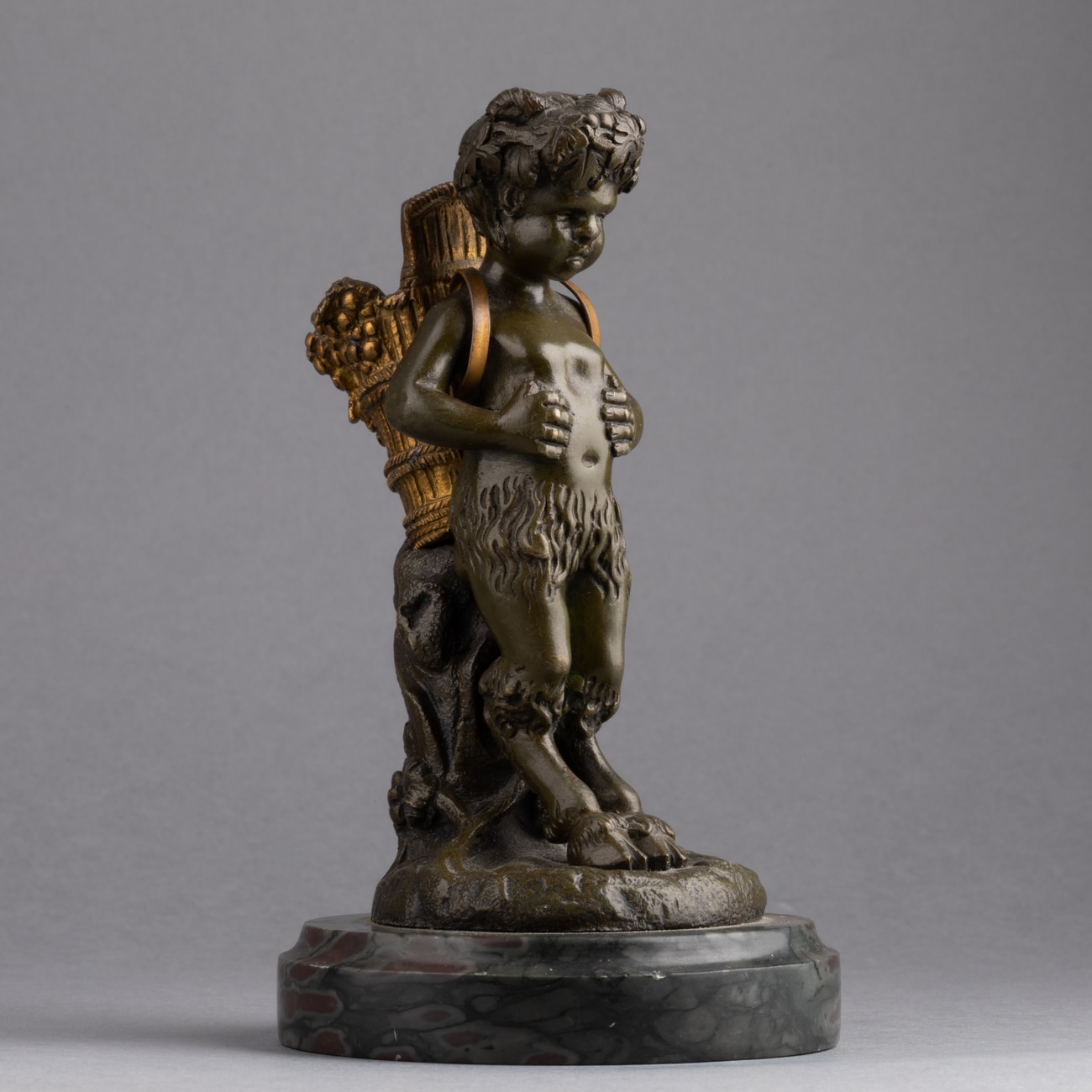
Clodion developed an immediately recognizable art, characterized by exceptional technical virtuosity and iconographic inventiveness centered on Bacchic, mythological, and pastoral themes. Dancing nymphs, mischievous satyrs, and intoxicated bacchantes populate a world where movement and sensuality reign. His preferred material, terracotta, allowed him a freedom of execution and a spontaneity that marble, more restrictive, could not offer with such freshness. This mastery of modeling gives his works a particular vibrancy, made of suppleness and lightness.
A Sought-After Sculptor
In the 1770s, he returned to France. His success with aristocratic clientele was rapid, as they appreciated Clodion’s style, which was both erudite and decorative. Talented and efficient in both the decorative arts and architecture, he created important bas-reliefs for the architect Alexandre-Théodore Brongniart (1739–1813).

In 1778, he sculpted a seated portrait of Montesquieu, intended for the Grande Galerie of the Louvre, honoring the Great Men of France. In 1782, he crafted a stucco frieze for the courtyard of the Hôtel de Bourbon-Condé and a decorative scheme for the bathroom of the Hôtel de Besenval.
Thus, in all areas of sculpture, he fully participated in the late Rococo aesthetic, while also anticipating, in some respects, a return to the taste for antiquity. This intermediate position partly explains his artistic longevity: far from being eclipsed by the triumphant Neoclassicism of figures like Antonio Canova, Clodion maintained a consistent output, adapted to private commissions and the decorative arts.
Clodion after the Revolution
The French Revolution marked a turning point, but not a break. Unlike many artists associated with the court, he managed to maintain his activity by shifting towards a more intimate style, often intended for an emerging bourgeois clientele. This adaptability enhances the appeal of his work for the market today: it offers a diversity of formats and subjects, ranging from small terracotta groups to more ambitious compositions, including numerous bronze editions.

For antique dealers and collectors, Clodion represents a sure bet from 18th-century France. Original terracotta pieces, especially those with a beautiful patina and established provenance, are the most sought after. Their appeal lies in their often unique nature or production in very small series, as well as in the immediate legibility of the artist’s hand. The bronze casts, sometimes later, must be examined carefully: their quality depends closely on the date of casting and the fidelity to the original model.
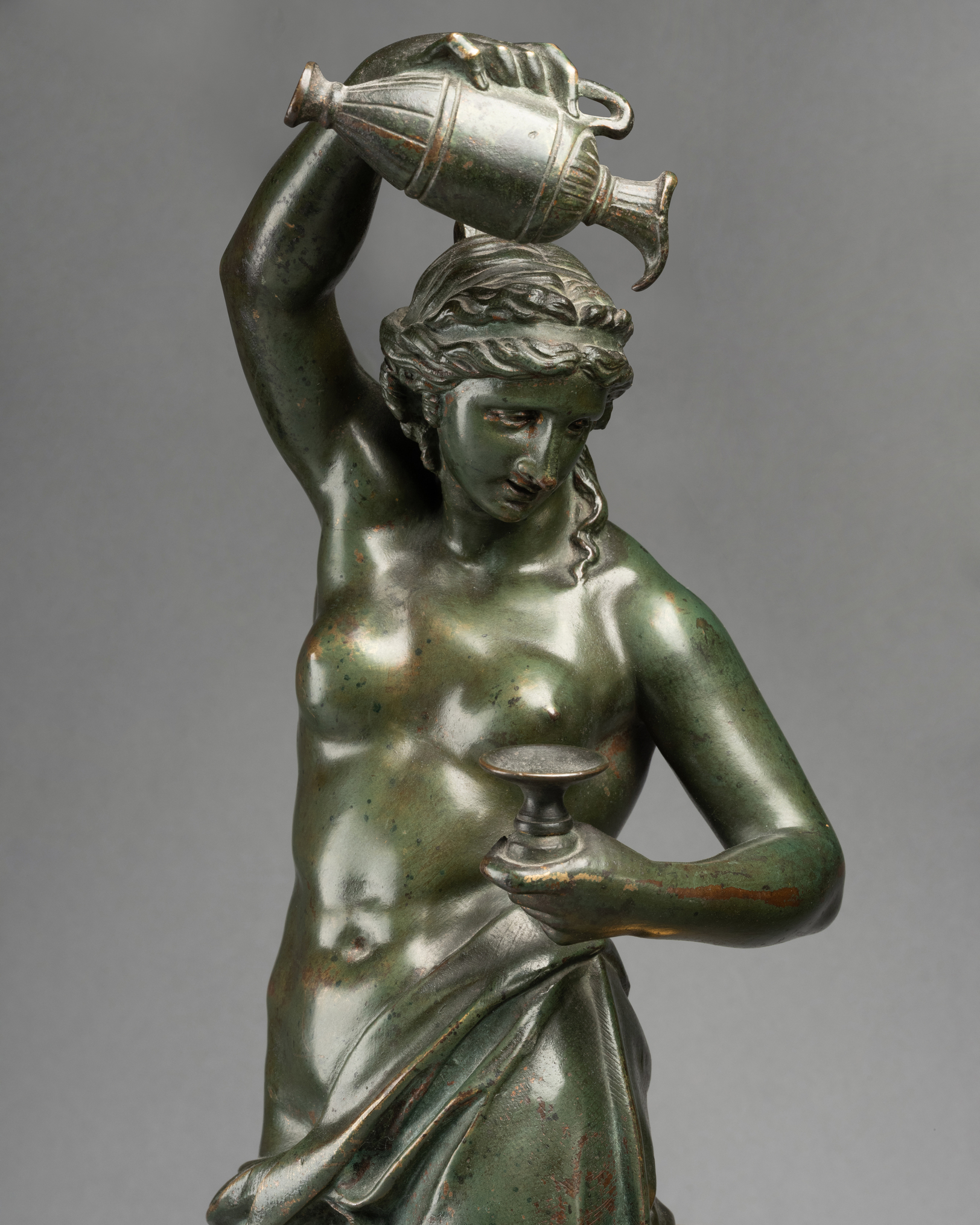
The market for his works today is characterized by relative stability, sustained by consistent demand from lovers of classical art. Prices vary considerably depending on the quality of execution, size, and provenance, but fine terracotta pieces regularly achieve significant auction results, particularly in Parisian and international sales. For a collector, acquiring a work by Clodion represents both an aesthetic pleasure and a sound investment, based on an artist firmly established in the history of French sculpture.

Beyond his market value, Clodion embodies a certain idea of French taste: a balance between classical scholarship and decorative whimsy, between technical mastery and freedom of invention. His works, with their immediate charm and refinement, continue to appeal to a demanding public, in search of objects that are historical, decorative and full of character.
Autres ressources et documentations

Raymond Thibésart (1874–1968), the Peaceful Painter
Raymond Thibésart (1874–1968) remains relatively unknown, but his recognition is steadily growing.

Model Ships
Whether river or sea vessels, imposing dimensions or miniaturization, models contain a whole world of travel!
Workshop furnitures
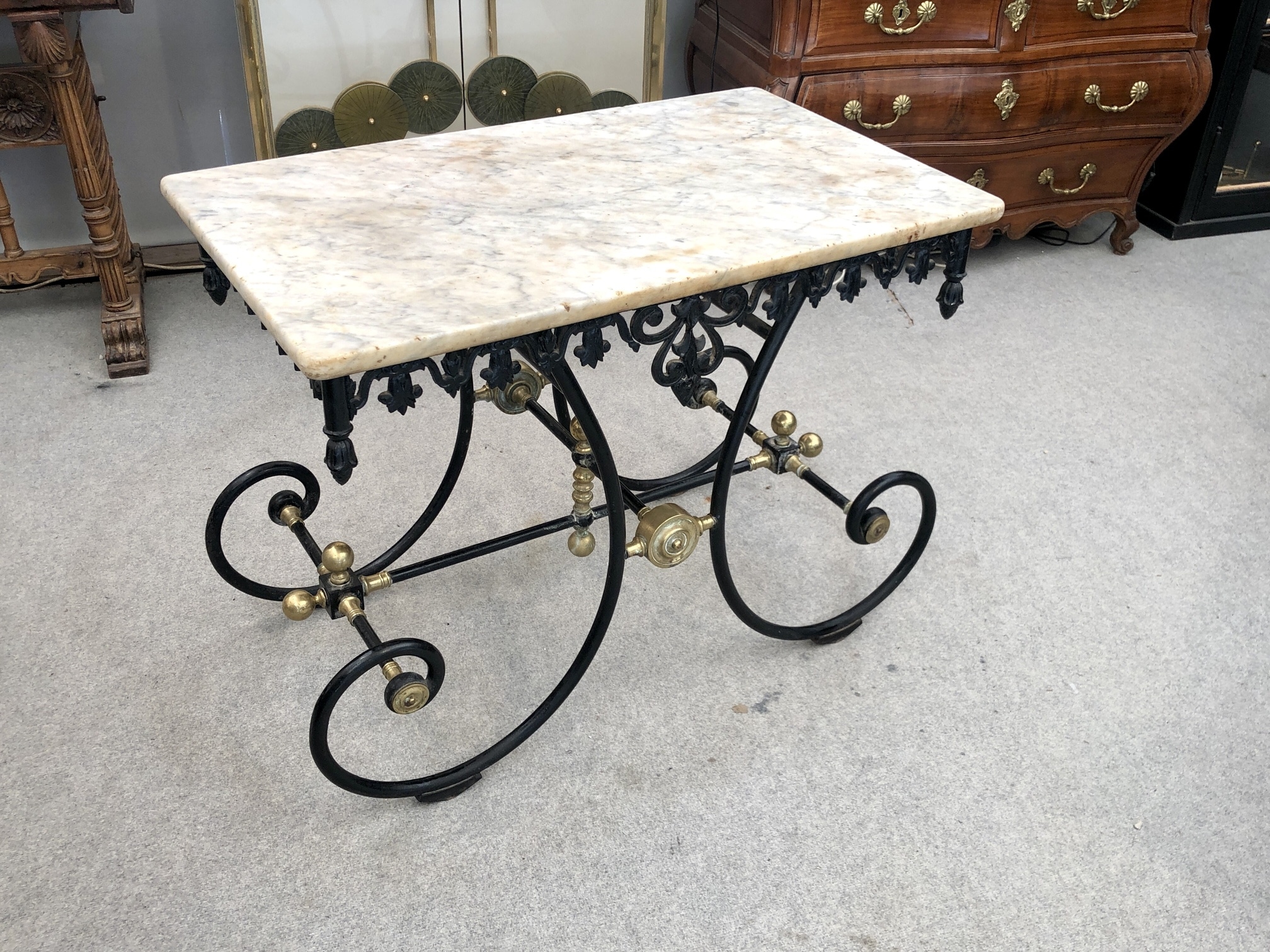
Whether made of wood or metal, from the woodworker to the butcher, including the haberdasher or the draper, trade furniture is a distinct area of antiquity.

Buying an Antique Chest of Drawers
Buying an Antique Chest of Drawers with Confidence: Styles, Marks of Authenticity, and Pitfalls to Avoid

Plaster Sculptures, Plaster Casts
For a long time, plaster casts suffered from a poor reputation. Often regarded as crude replicas, and sometimes even dismissed as inexpensive imitations, they nonetheless had…

The Middle-Ages Furniture
Rare and highly sought-after, Middle-Ages furniture is making a strong comeback. An overview of this market, where enlisting the guidance of a professional is strongly advisable.