
Coveted by nearly every home, vintage workshop furniture wins hearts with its simple lines, raw materials, and diverse forms. Here are a few tips for choosing the right piece and finding an authentic antique.
Antique Workshop Furniture: Witnesses to Labor and Craftsmanship
The furniture made by 19th and 20th-century artisans has recently become the subject of renewed interest. However, the charm of their use or their inherent value has allowed other, much older pieces to be passed down through the ages, eventually becoming true collector’s items.
Antique workshop furniture occupies a unique place in the world of decorative arts. Designed primarily for professional use, it naturally had to be robust and functional before it was aesthetically pleasing. Refinement only comes into play if the piece is visible to customers. Otherwise, it must adhere to simple lines that do not hinder daily work or clutter the workshop or back room. Highly sought after today by collectors, decorators, and enthusiasts, these unique pieces tell the story of trades, repeated gestures, and materials across the centuries.
Periods and Uses: From the Middle Ages to the Early 20th Century
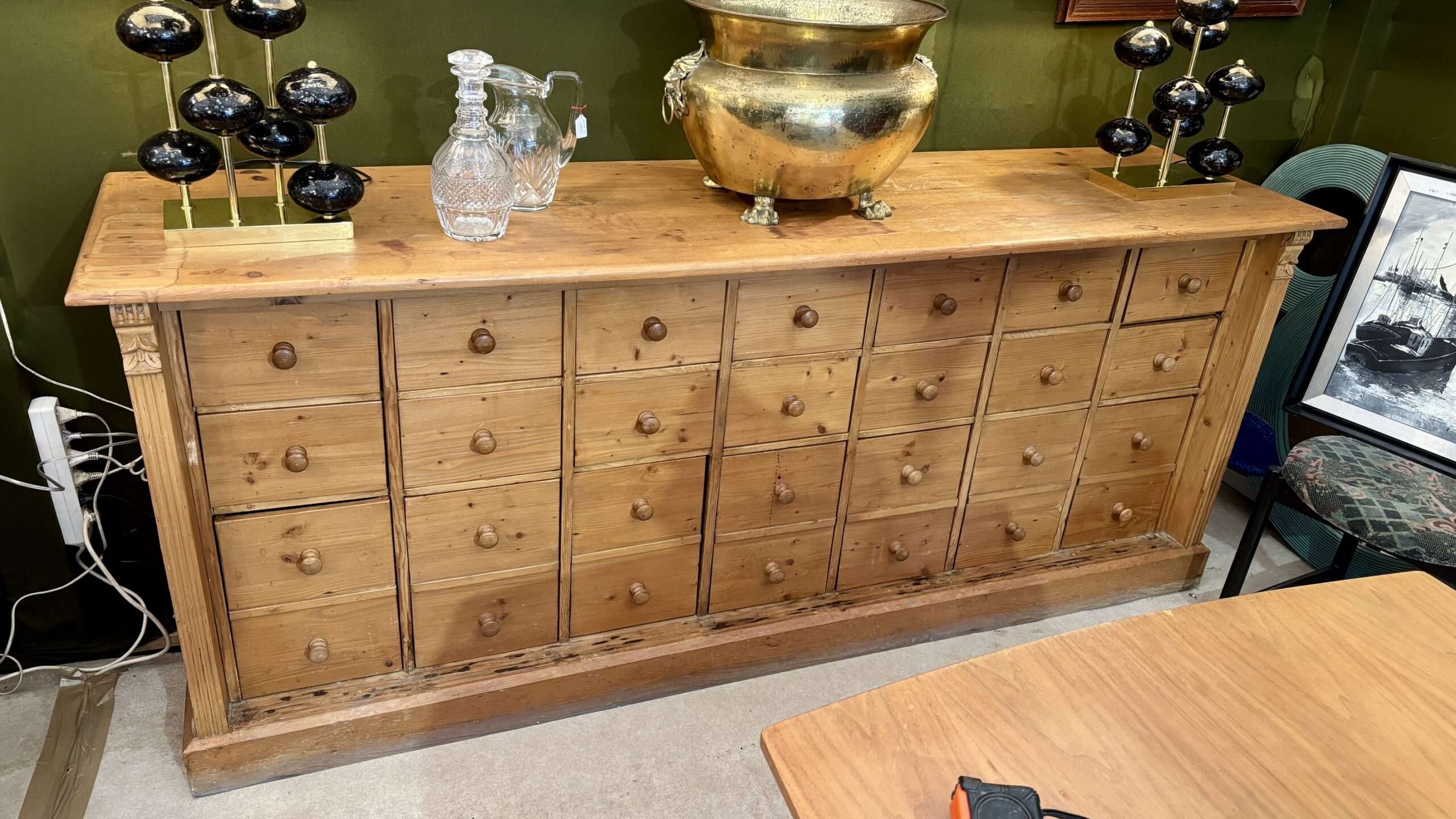
Undoubtedly, trade furniture is as old as the trades themselves. However, it seems to have proliferated during the Middle Ages, and some examples have survived to this day. But it was primarily the 17th, 18th, and 19th centuries that marked its golden age. Each profession then perfected its own specific furniture: shop counters, artisans’ workbenches, trade benches, haberdashery, apothecary, or printing press furniture.
Often influenced by regional styles and traditional techniques, this furniture was made by local carpenters, with a focus on efficiency rather than ornamentation. The 19th century, driven by the growth of urban trade and crafts, saw a proliferation of furniture with drawers, compartments, or shelves, designed for efficient organization and storage. At the beginning of the 20th century, industrialization introduced more standardized designs and sometimes metal components, without, however, eliminating wood as the primary material. After the Second World War, and once the metal shortage had passed, metal furniture became increasingly common.
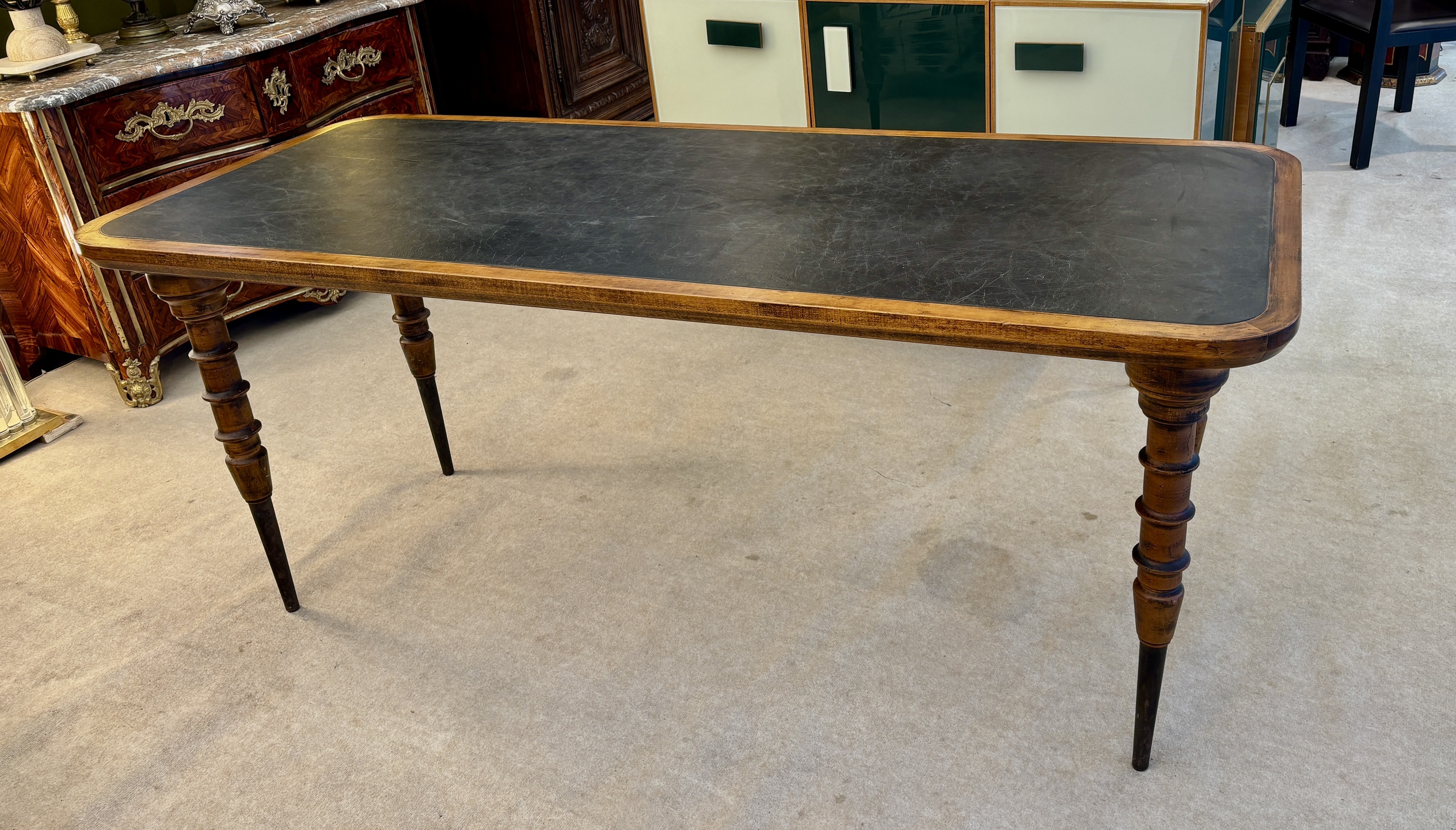
Wood Species: Robustness and Availability
For all wooden workshop furniture, the choice of wood species is primarily determined by criteria of strength, durability, and cost. Oak is undoubtedly the most emblematic wood: dense, resistant, and relatively shock-resistant, it was preferred for workbenches, counters, and furniture subjected to heavy use. Beech, valued for its hardness and relative uniformity, was often used for drawers and internal parts.
Pine, fir, or spruce frequently appear in more modest workshop furniture production or in regions where these species were abundant. Although softer, these woods develop a warm patina over time. Walnut, rarer and more expensive, is sometimes found in furniture associated with prestigious trades or intended for downtown shops.
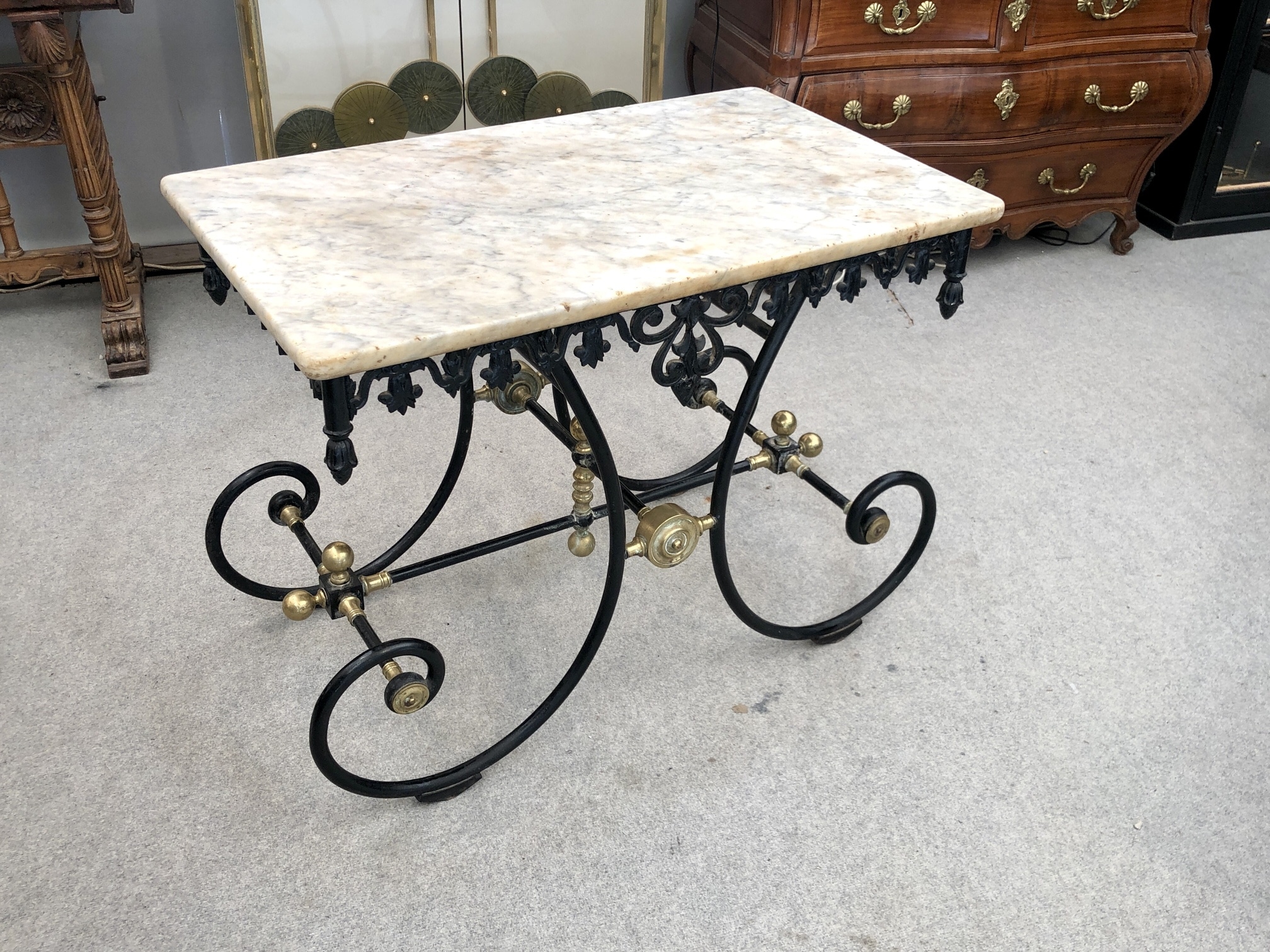
Authentic and Copies: How to Tell Them Apart
The growing popularity of antique trade furniture has led to the appearance of numerous copies and reproductions. While some are of high quality and proudly proclaimed as such, others attempt to deceptively imitate the antique. Distinguishing an authentic piece from a reproduction requires careful observation and the advice of antique dealers or experts.
An antique piece of furniture shows consistent signs of use: localized wear on the handles, edges, or tops, frequent irregularities in the joinery, and subtle differences in color due to the natural aging of the wood. Traditional joinery—irregular dovetails, mortise and tenon joints—is often a good indicator of age. Conversely, overly uniform artificial wear, modern screws, or excessively homogeneous wood can betray recent manufacture.
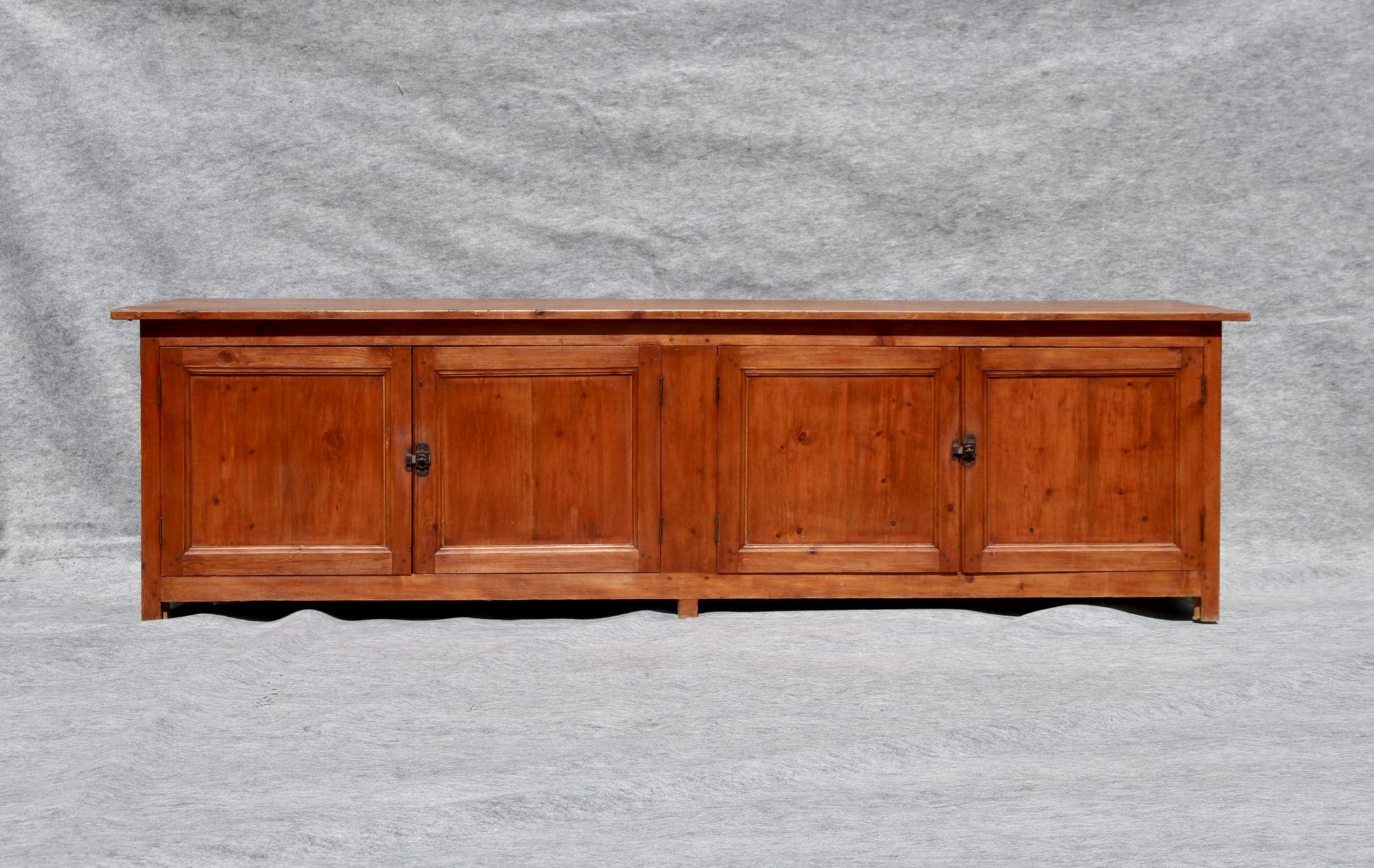
Functional Furniture Turned Decorative
Originally utilitarian, antique workshop furniture has now taken on a new status. It finds its place in contemporary interiors as storage units, kitchen islands, bookcases, or accent pieces. Its strength lies in its ability to combine authenticity, history, and functionality.
Choosing an antique workshop piece means incorporating into your home an object that bears witness to the history and daily life of trades that have sometimes disappeared. Between artisanal heritage and timeless design, these pieces continue to captivate with their authenticity and presence, transcending fleeting trends.
Autres ressources et documentations

Clodion, the Brilliant Sculptor
Born in Nancy in 1738, Claude Michel, known as Clodion, established himself as one of the most captivating sculptors of the late Ancien Régime. His nickname, Clodion (little…

Raymond Thibésart (1874–1968), the Peaceful Painter
Raymond Thibésart (1874–1968) remains relatively unknown, but his recognition is steadily growing.

Model Ships
Whether river or sea vessels, imposing dimensions or miniaturization, models contain a whole world of travel!

Buying an Antique Chest of Drawers
Buying an Antique Chest of Drawers with Confidence: Styles, Marks of Authenticity, and Pitfalls to Avoid

Plaster Sculptures, Plaster Casts
For a long time, plaster casts suffered from a poor reputation. Often regarded as crude replicas, and sometimes even dismissed as inexpensive imitations, they nonetheless had…

The Middle-Ages Furniture
Rare and highly sought-after, Middle-Ages furniture is making a strong comeback. An overview of this market, where enlisting the guidance of a professional is strongly advisable.