
Often deemed outdated, yet still present and ever coveted, the antique chest of drawers remains a treasured piece in both bedrooms and living rooms. Bearing the craftsmanship and taste of a bygone era, it embodies the legacy of generations of artisans.
However, amid a diverse market and the profusion of reproductions, recognizing a genuine period piece requires a discerning eye and some essential reference points.
The Major Styles of Antique Chests of Drawers
It is one thing to be familiar with the subtle nuances of French or European stylistic denominations; it is quite another to identify them with confidence — to distinguish an authentic period piece from one merely “in the style of.”
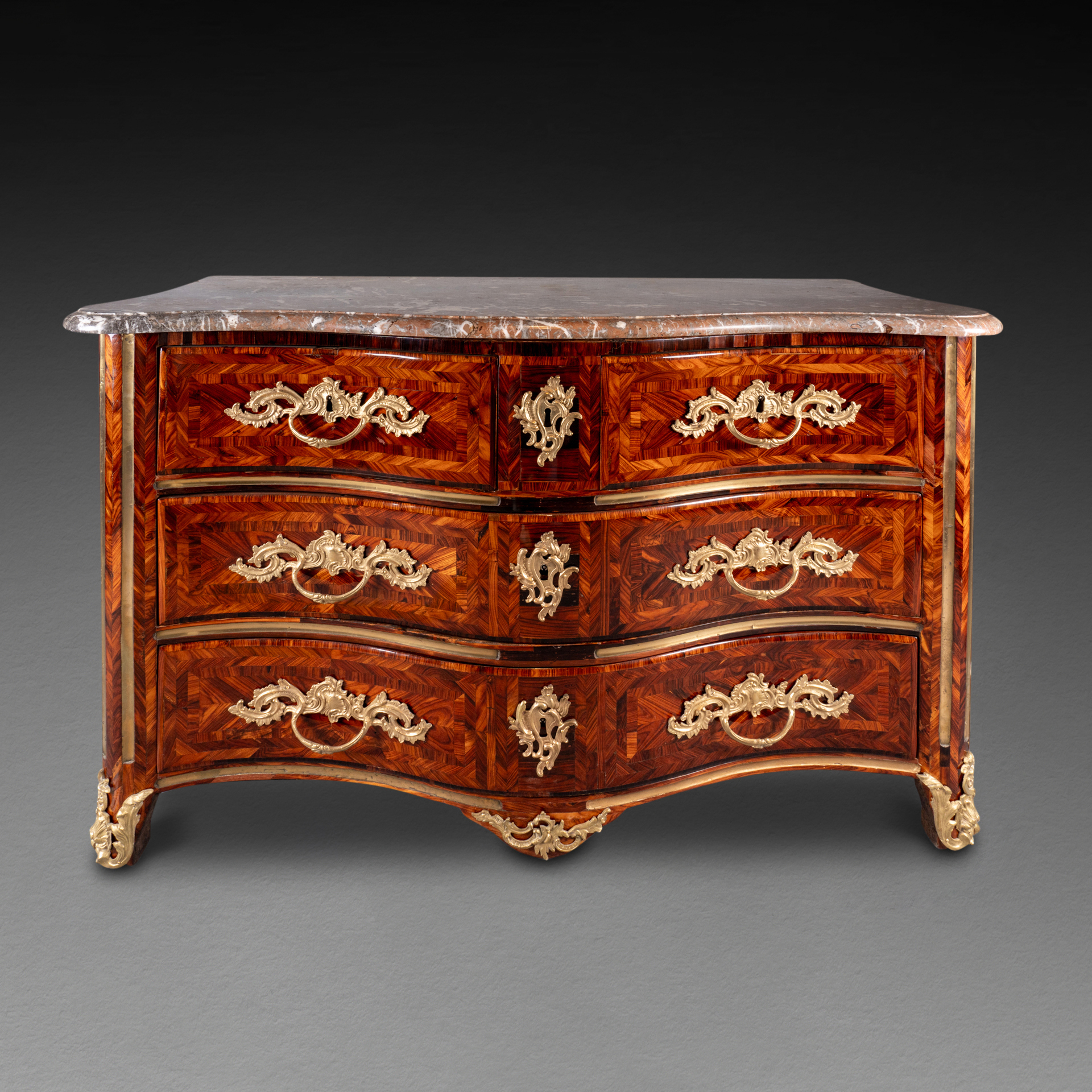
Louis XIV and Regency Chests of Drawers
Each aesthetic vocabulary emerges from a historical context infused with artistic movements, economic and political realities, and social customs. The Louis XIV style — conceived by the monarch himself as the first distinctly French style — drew upon classical antiquity and channeled a baroque exuberance that left no craft untouched.
Though the Sun King reigned long, the chest of drawers, invented at the turn of the 18th century, did not yet enjoy its later prominence. Rare examples from this period are lavishly ornamented. Under the Regency, their numbers multiplied, their decoration becoming lighter, more supple, and curvilinear, though symmetry remained a guiding principle.
Charles Cressent stands out as the most celebrated cabinetmaker of this era, alongside figures such as Jacques Dubois (c. 1693–1763) — whose fame peaked under Louis XV — and Antoine-Robert Gaudreaux (1682–1746), known for the coin cabinet made for Louis XV’s numismatic collection, none of whose works bear a stamp.
Regency chests are often “in tomb” or “crossbow” form, their decoration evolving from floral marquetry to geometric designs in precious woods. Their tops are of marble, and corner mounts and other ornaments are of gilt bronze.
Louis XV and Transitional Chests of Drawers
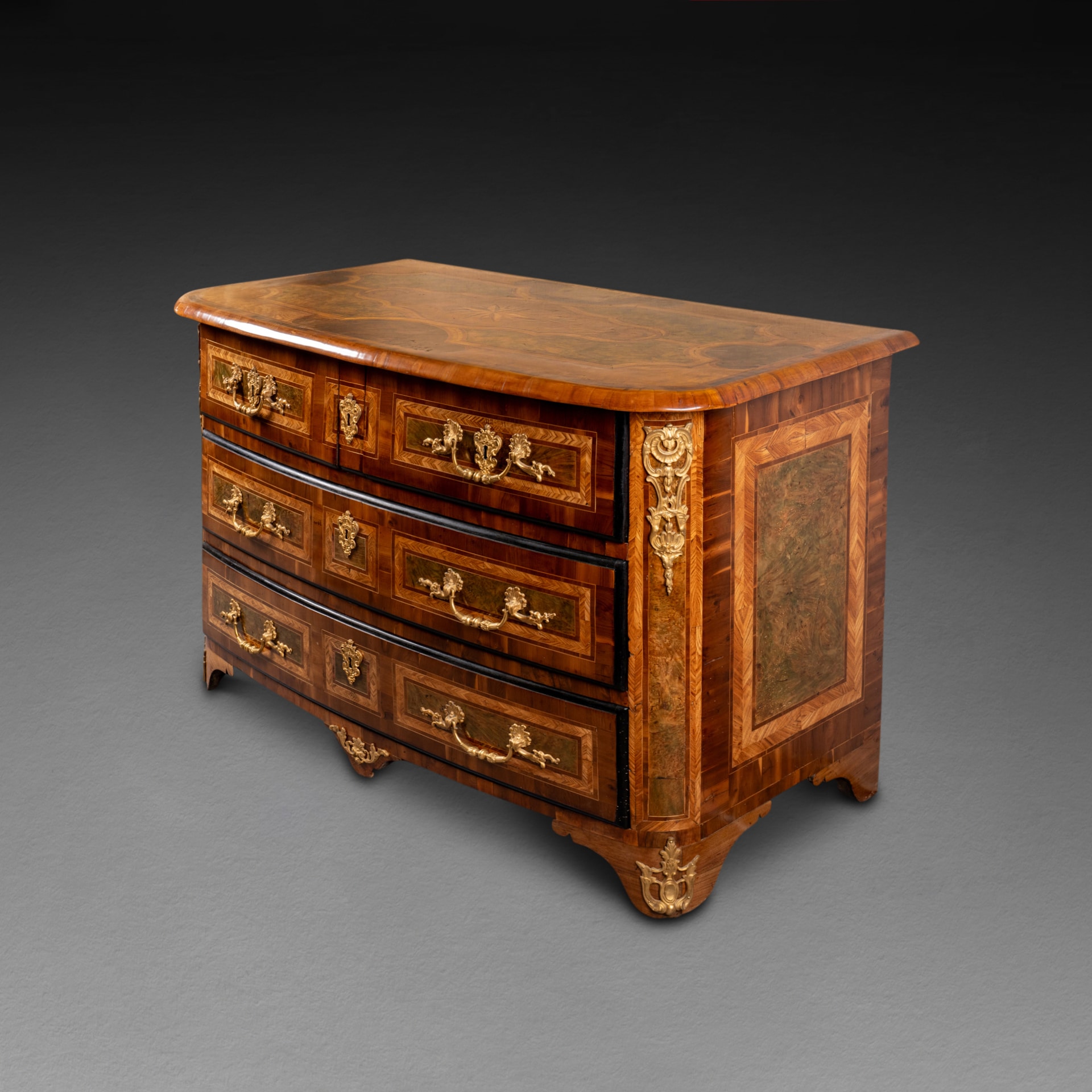
The reign of Louis XV was one of prosperity, disrupted only by the Seven Years’ War (1756–1763). This atmosphere of refinement is reflected in the arts and, naturally, in furniture.
Graceful and elegantly curved, the Louis XV commode was often accompanied by a pair of matching corner cabinets. As rooms grew smaller and more comfortable, large enfilades of furniture gave way to intimate interiors furnished with refined, smaller pieces. Larger commodes were reserved for reception rooms.
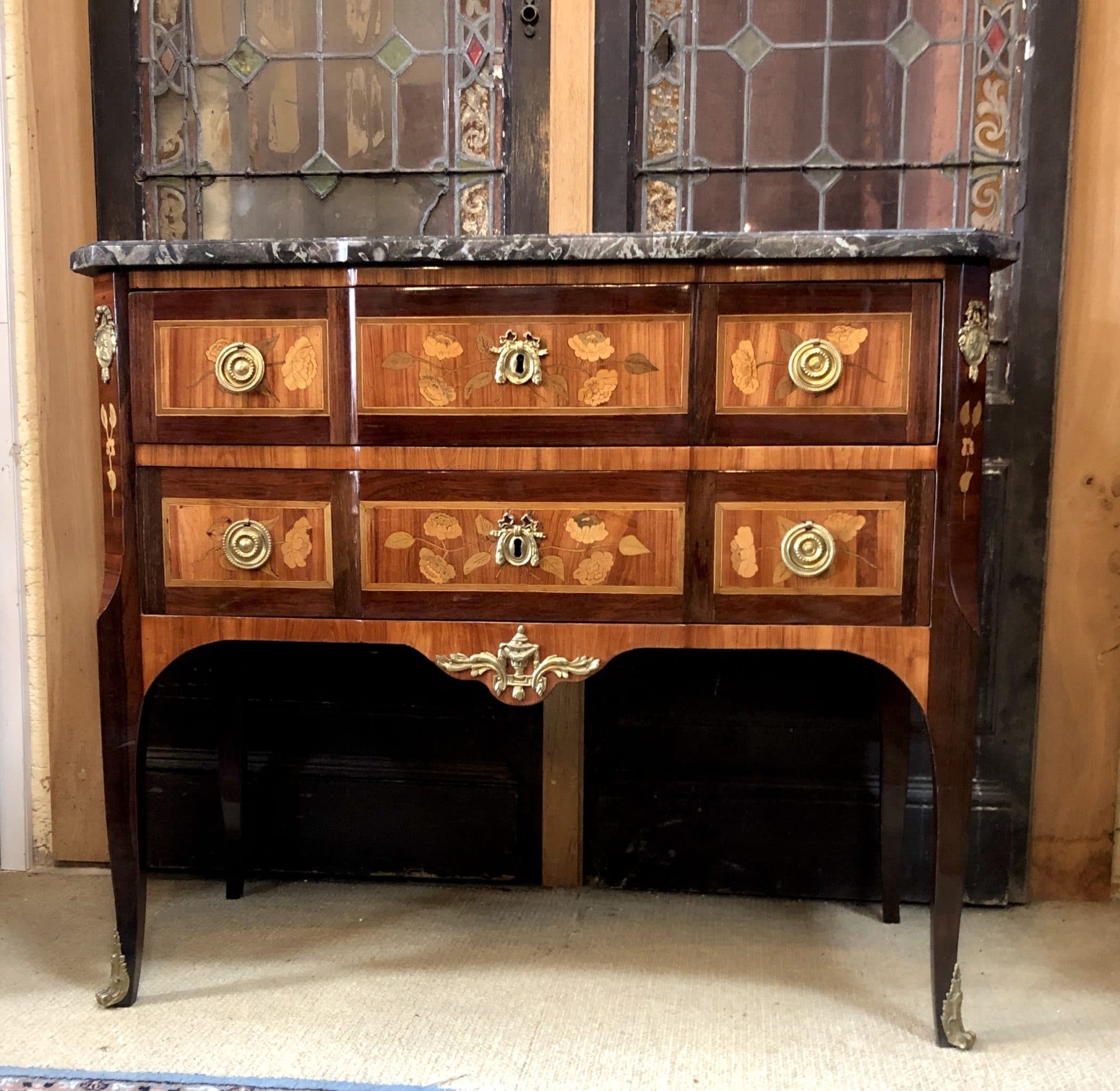
The early Rocaille style abounded in curves and fluid movement. Natural motifs unfolded organically, free from the constraint of symmetry. From the king’s accession in 1723 until around 1745, this exuberant decorative vocabulary adorned aristocratic interiors. Fatigued by such profusion, taste then turned toward sobriety — cleaner lines, restrained ornamentation — giving rise to the so-called “Transitional” style.
Louis XVI Chests of Drawers
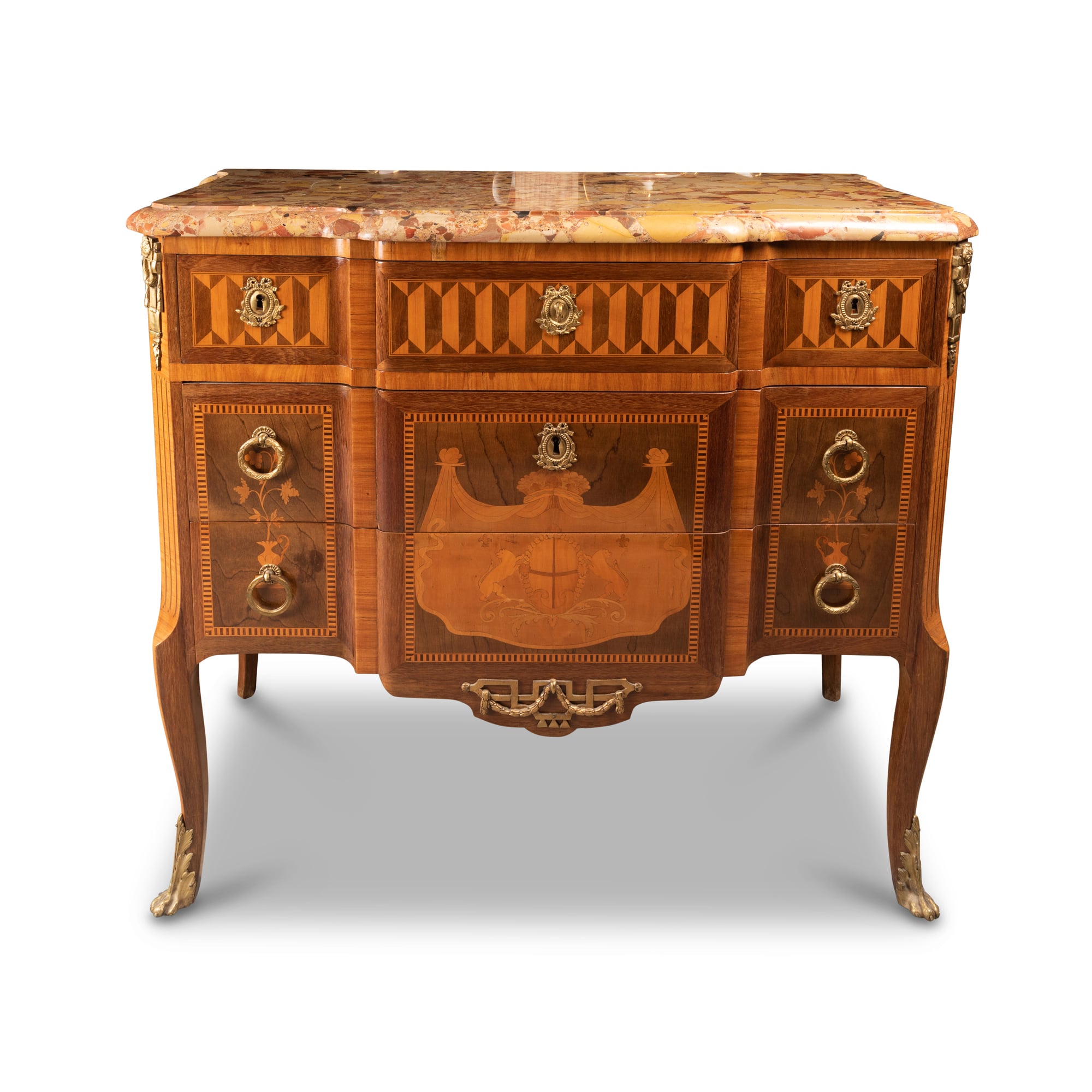
Following the first excavations at Pompeii in 1748, the arts drew inspiration from these discoveries, heralding the dawn of Neoclassicism. Furniture design, too, reflected these influences, as well as the English taste for mahogany — one of the period’s most distinctive features.
Jean-Henri Riesener (1743–1806) was the preeminent cabinetmaker of this era, producing numerous pieces for the royal court. Classical rigor prevailed: straight forms, fluted legs, and perfect symmetry. Chests were rectilinear, without projection, and it was fashionable to pair them with matching consoles or corner cabinets.
Decorations featured geometric friezes inspired by antiquity or delicate floral motifs. White marble tops were sometimes complemented by porcelain plaques or lacquer panels, as seen in the works of Martin Carlin (1730–1785).
Recognizing an Authentic Antique Chest of Drawers
A discerning eye first examines the construction. Hand-cut dovetail joints, visible in the drawers, attest to authentic craftsmanship. The wood — often walnut, oak, or mahogany — acquires a natural patina over time: subtle irregularities, a satin sheen, and nuanced coloration are all signs of genuineness.
Well-restored pieces are polished using the traditional French “tampon” varnish — a cold solution of shellac flakes (brown, blonde, or white) dissolved in 95° alcohol. This technique is prized for its reversible nature and the way it enhances the beauty of the wood.
Bronze mounts and keyhole escutcheons, finely chased, are original when their wear is consistent with age. New hardware, too bright or uniform, often betrays a recent replacement. As for marquetry, it should blend seamlessly with the base wood, never appearing as a crude or abrupt overlay.
Pitfalls to Avoid
Many antique pieces have been “refinished” or newly varnished, thereby losing both their patina and a measure of their historical value. Others are antique reproductions (late 19th or 20th century) — charming, sometimes even remarkable in craftsmanship — yet not of the period. Such pieces should be accurately described as being “in the style of.”
The best safeguard against mistakes? Consulting a knowledgeable antiques dealer — one capable of documenting provenance, guaranteeing authenticity, and ensuring any restoration respects original materials and techniques.
Autres ressources et documentations

Model Ships
Whether river or sea vessels, imposing dimensions or miniaturization, models contain a whole world of travel!
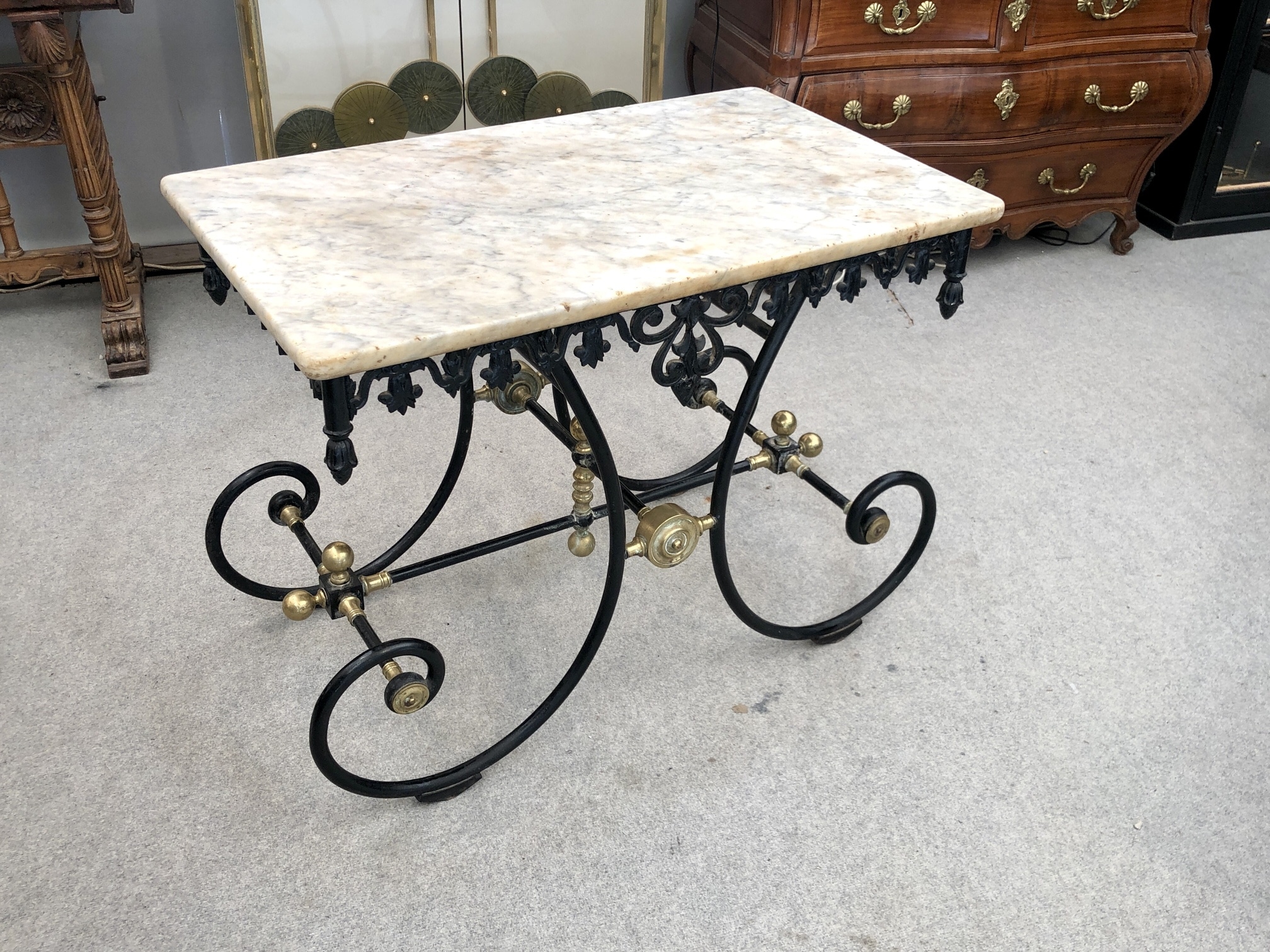
Workshop furnitures
Whether made of wood or metal, from the woodworker to the butcher, including the haberdasher or the draper, trade furniture is a distinct area of antiquity.

Plaster Sculptures, Plaster Casts
For a long time, plaster casts suffered from a poor reputation. Often regarded as crude replicas, and sometimes even dismissed as inexpensive imitations, they nonetheless had…

The Middle-Ages Furniture
Rare and highly sought-after, Middle-Ages furniture is making a strong comeback. An overview of this market, where enlisting the guidance of a professional is strongly advisable.
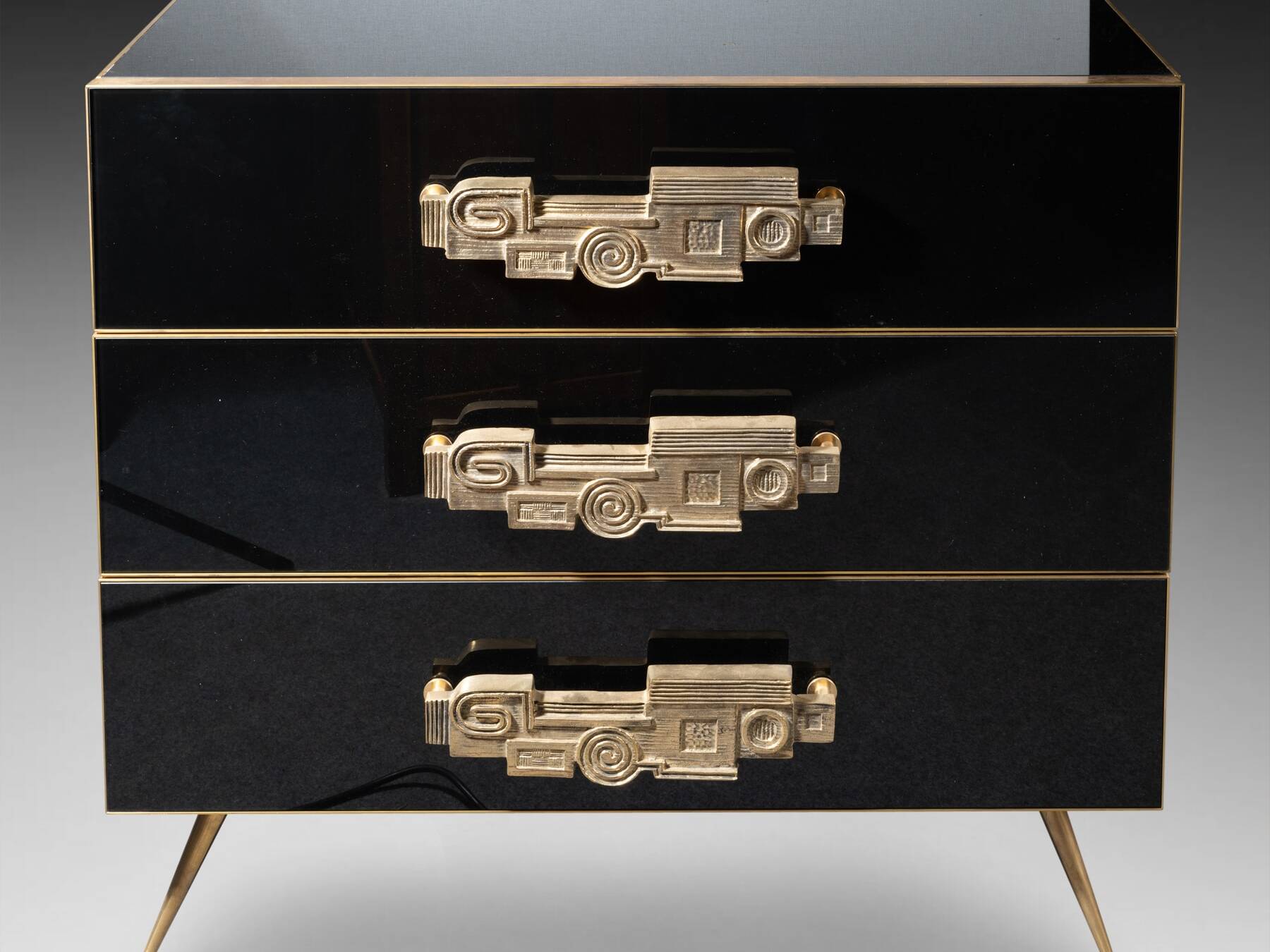
Murano Glass Furniture
Since the beginning of the 20th century, Murano glassmakers have been exploring new horizons. After classic lighting and decorative art, Murano glass is now used to adorn…

A bronze triton after the sculptures of François Girardon (1628 – 1715) in Versailles
This fountain element is all the more admirable as it is sculpted after the masterpieces of the Pyramid Basin, on the parterre of the North Wing of the Versailles gardens.